
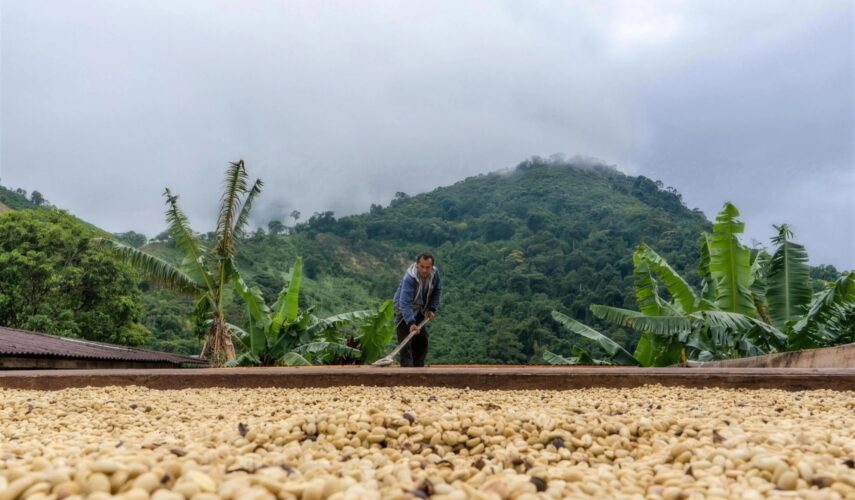
Nariño sits in the far southwest of Colombia, where the Andes run into Ecuador. It is a land of steep valleys, volcanoes and small family farms, and it grows some of the highest coffee in the country.
Why altitude matters here
Coffee usually struggles above about 2,000 metres. The air is too cold and frost becomes a risk. Nariño is an exception because it lies so close to the equator. The sun is strong and steady all year, so coffee can grow on slopes that would be far too cold further north or south. Many farms here sit between about 1,800 and 2,300 metres.
At that height the nights are cold. The cherries ripen slowly, and slow ripening gives the bean more time to build sugars and acids. That is where Nariño’s character comes from: a bright, clean acidity and a gentle sweetness.
Volcanic soil and small farms
Much of the coffee land in Nariño lies on the slopes of old volcanoes. The soil is dark, loose and rich, and it holds water well through the dry months. Most growers work small plots, often a few hectares or less. Families pick by hand and return to the same trees several times as more cherries turn red.
What you taste
Our Nariño whole bean coffee has a mild profile with medium-high acidity. In the cup, look for lemon and brown sugar. The citrus comes first, and a soft, caramel-like sweetness follows as the coffee cools.
How to brew it
Nariño shines in methods that keep the cup clean and let the acidity show. Try a pour-over or a drip machine with a medium grind. About 1 gram of coffee to 16 grams of water is a good place to start. Taste it black first, then decide whether it needs milk. Most people find it doesn’t.
For step-by-step recipes, see our brewing guide.
 English
 العربية
 Español
